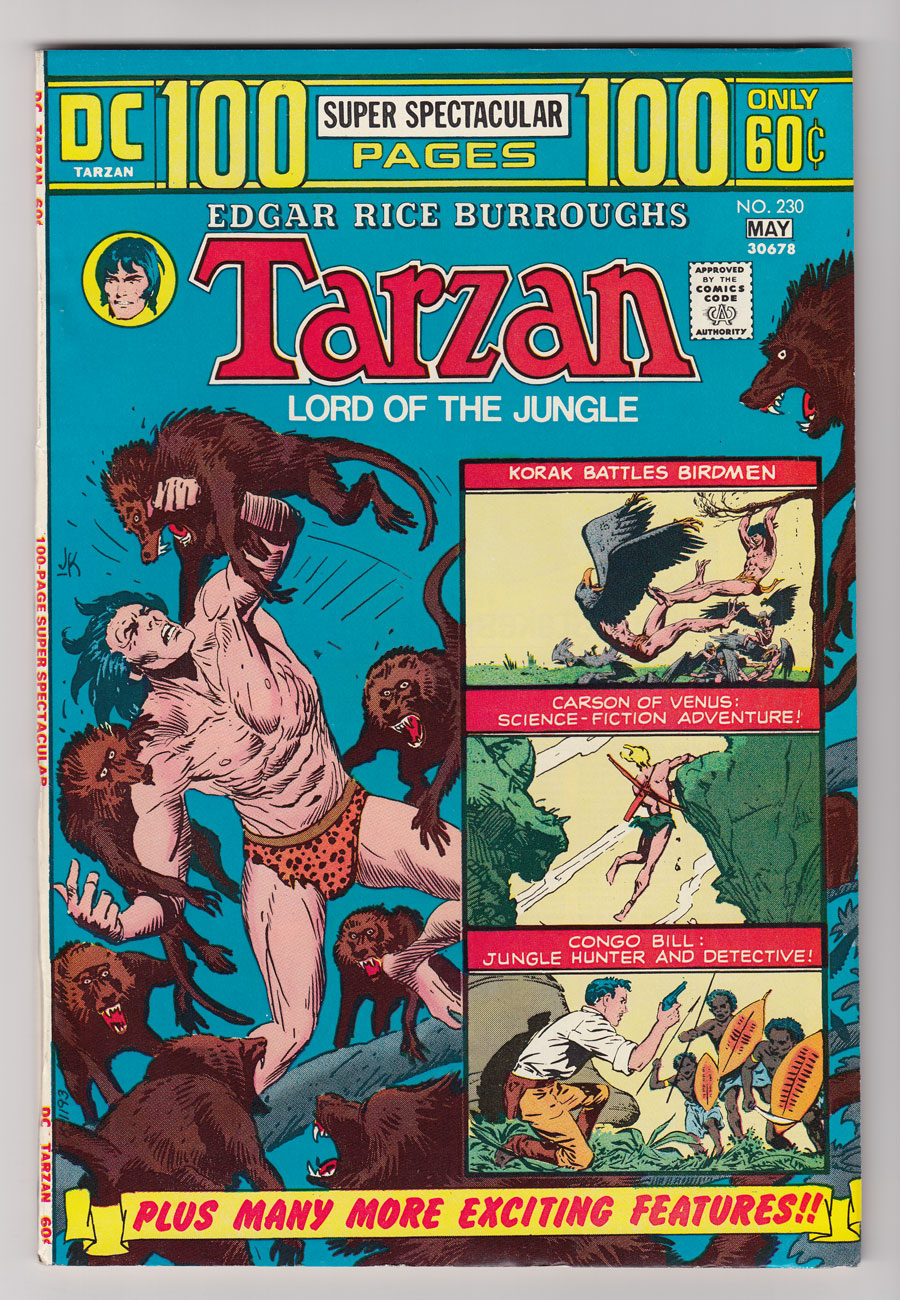
TARZAN (1972) #230
NM-: 9.2
(Stock Image)

YES
Accepting Offers
--
Offers
PUBLISHER: DC
COMMENTS: 100 pages; Kubert monkey cover (believe it or not) COMIC BOOK IMPACT rating of 5 (CBI)
Read Description ▼
DESCRIPTION
100 pages; Kubert monkey cover (believe it or not) COMIC BOOK IMPACT rating of 5 (CBI)
Artists Information
High School of Art & Design alum Carmine Infantino got his start in the industry working Timely, a precursor to Marvel Comics, where he would do spot work on anthology features, in his first work at DC he helped create Black Canary and began his long-running involvement with the Flash during his Golden Age era, as well as illustrating the original Green Lantern. After the post-war comic book slump Infantino collaborated with writer Robert Kanigher and editor Julius Schwartz to help bring back superheroes and launch the Silver Age by updating the Flash in the pages of Showcase, the reboot was a huge success and led to the superhero rebirth that has continued into the modern day, Infantino's ability to capture speed and movement on a page made his Flash believable and engaging. Carmine was promoted to Art Director and then Publisher at DC over the course of his illustrious career,
Joe Kubert (Sept. 18, 1926 - Aug. 12, 2012) began his career at the age of 13. He was also an art teacher and founder of The Kubert School. He is best known for his work on the characters like Sgt. Rock, Hawkman, Tor, Son of Sinbad and the Viking Prince.
In the 1950s, he worked for companies like Harvey, Toby Press, Charlton and Ziff Davis, doing western, horror and romance titles. He also did syndicated strips like 'Mister Rubbles' and 'Sam Hill'. For Gilberton's Classics Illustrated, Sparling drew 'Robin Hood' and Mark Twain's 'A Connecticut Yankee in King Arthur's Court'. In the late 1960s, Sparling was additionally present in Eerie with several horror stories. From 1960 to 1972, he did the daily 'Honor Eden' for the McClure Syndicate. Jack Sparling remained active until the late 1980s. In the final stages of his comic book career, he worked mainly on Western Publishing titles like 'The Twilight Zone' and 'Turok', but he also did contributions to DC and Marvel titles.
Michael William Kaluta is an American comic artist and writer best known for his acclaimed 1970s adaptation of the pulp magazine hero The Shadow with writer Dennis O’Neil. Kaluta's early work included a three-page adventure story, "The Battle of Shiraz", in Charlton Comics Flash Gordon #18 (Jan. 1970) and an adaptation of Edgar Rice Burroughs's Carson of Venus novels for DC Comics. Kaluta's influences and style are drawn from pulp illustrations of the 1930s and the turn-of-the-century poster work of Alphonse Mucha – his signature motif is elaborate decorative panel designs – rather than the comic books of the Silver Age. He has rarely worked with the superhero genre, although one of his early contributions for DC was a "World of Krypton" backup story in Superman #240 (July 1971). His first cover for a comic book was House of Mystery #200 (March 1972). Associated during the 1970s with Bernie Wrightson and Jeffrey Jones, he contributed illustrations to Ted White's Fantastic and Amazing Stories. Kaluta co-created Eve in Secrets of Sinister House #6 (Aug.–Sept. 1972), a horror comics "host" character later turned into a supporting character in The Sandman. He and writer Dennis O'Neil produced a comics adaptation of The Shadow for DC in 1973–1974. Comics historian Les Daniels noted that "Kaluta's style [on The Shadow] is an homage to Graves Gladney, master of the pulp magazine covers of the 1930s." Kaluta left the series after drawing five of the first six issues. Kaluta was one of the four comic book artists/fine illustrator/painters (along with Jeffrey Jones, Barry Windsor-Smith, and Bernie Wrightson) who formed the artists' commune The Studio in a loft in Manhattan's Chelsea district in 1975 and continuing to 1979. In addition to many comic book stories and covers, Kaluta has done a wide variety of book illustrations. Kaluta drew the cover for the Madame Xanadu one-shot in 1981 which was DC's second direct sales only comic. He and writer Elaine Lee crafted Marvel Graphic Novel #13 "Starstruck: The Luckless, the Abandoned and Forsaked" which led to an ongoing series which ran for six issues. Kaluta and O'Neil reunited on The Shadow: 1941 – Hitler's Astrologer graphic novel published in 1988. In 2006, Kaluta was one of the artists on the 1001 Nights of Snowfall graphic novel written by Bill Willingham. In 1984 he drew the illustrations for and directed the music video of "Don't Answer Me" by The Alan Parsons Project, which became one of the most requested videos of the year on the cable video channel MTV. Among music fans, Kaluta is known as the cover artist of Glenn Danzig's instrumental album Black Aria and for the interior illustration of Danzig's fourth album, the latter of which appeared in 1994 and 1995 as a pendant sold at Danzig concerts, and on Danzig T-shirts and sweaters produced in the same period. Kaluta created the CD covers and interior booklet illustrations for Nativity in Black I and II, tribute albums to the music of Black Sabbath. Kaluta drew the cover art for the Bobby Pickett album The Original Monster Mash when it was reissued in 1973.
Artists Information
High School of Art & Design alum Carmine Infantino got his start in the industry working Timely, a precursor to Marvel Comics, where he would do spot work on anthology features, in his first work at DC he helped create Black Canary and began his long-running involvement with the Flash during his Golden Age era, as well as illustrating the original Green Lantern. After the post-war comic book slump Infantino collaborated with writer Robert Kanigher and editor Julius Schwartz to help bring back superheroes and launch the Silver Age by updating the Flash in the pages of Showcase, the reboot was a huge success and led to the superhero rebirth that has continued into the modern day, Infantino's ability to capture speed and movement on a page made his Flash believable and engaging. Carmine was promoted to Art Director and then Publisher at DC over the course of his illustrious career,
Joe Kubert (Sept. 18, 1926 - Aug. 12, 2012) began his career at the age of 13. He was also an art teacher and founder of The Kubert School. He is best known for his work on the characters like Sgt. Rock, Hawkman, Tor, Son of Sinbad and the Viking Prince.
In the 1950s, he worked for companies like Harvey, Toby Press, Charlton and Ziff Davis, doing western, horror and romance titles. He also did syndicated strips like 'Mister Rubbles' and 'Sam Hill'. For Gilberton's Classics Illustrated, Sparling drew 'Robin Hood' and Mark Twain's 'A Connecticut Yankee in King Arthur's Court'. In the late 1960s, Sparling was additionally present in Eerie with several horror stories. From 1960 to 1972, he did the daily 'Honor Eden' for the McClure Syndicate. Jack Sparling remained active until the late 1980s. In the final stages of his comic book career, he worked mainly on Western Publishing titles like 'The Twilight Zone' and 'Turok', but he also did contributions to DC and Marvel titles.
Michael William Kaluta is an American comic artist and writer best known for his acclaimed 1970s adaptation of the pulp magazine hero The Shadow with writer Dennis O’Neil. Kaluta's early work included a three-page adventure story, "The Battle of Shiraz", in Charlton Comics Flash Gordon #18 (Jan. 1970) and an adaptation of Edgar Rice Burroughs's Carson of Venus novels for DC Comics. Kaluta's influences and style are drawn from pulp illustrations of the 1930s and the turn-of-the-century poster work of Alphonse Mucha – his signature motif is elaborate decorative panel designs – rather than the comic books of the Silver Age. He has rarely worked with the superhero genre, although one of his early contributions for DC was a "World of Krypton" backup story in Superman #240 (July 1971). His first cover for a comic book was House of Mystery #200 (March 1972). Associated during the 1970s with Bernie Wrightson and Jeffrey Jones, he contributed illustrations to Ted White's Fantastic and Amazing Stories. Kaluta co-created Eve in Secrets of Sinister House #6 (Aug.–Sept. 1972), a horror comics "host" character later turned into a supporting character in The Sandman. He and writer Dennis O'Neil produced a comics adaptation of The Shadow for DC in 1973–1974. Comics historian Les Daniels noted that "Kaluta's style [on The Shadow] is an homage to Graves Gladney, master of the pulp magazine covers of the 1930s." Kaluta left the series after drawing five of the first six issues. Kaluta was one of the four comic book artists/fine illustrator/painters (along with Jeffrey Jones, Barry Windsor-Smith, and Bernie Wrightson) who formed the artists' commune The Studio in a loft in Manhattan's Chelsea district in 1975 and continuing to 1979. In addition to many comic book stories and covers, Kaluta has done a wide variety of book illustrations. Kaluta drew the cover for the Madame Xanadu one-shot in 1981 which was DC's second direct sales only comic. He and writer Elaine Lee crafted Marvel Graphic Novel #13 "Starstruck: The Luckless, the Abandoned and Forsaked" which led to an ongoing series which ran for six issues. Kaluta and O'Neil reunited on The Shadow: 1941 – Hitler's Astrologer graphic novel published in 1988. In 2006, Kaluta was one of the artists on the 1001 Nights of Snowfall graphic novel written by Bill Willingham. In 1984 he drew the illustrations for and directed the music video of "Don't Answer Me" by The Alan Parsons Project, which became one of the most requested videos of the year on the cable video channel MTV. Among music fans, Kaluta is known as the cover artist of Glenn Danzig's instrumental album Black Aria and for the interior illustration of Danzig's fourth album, the latter of which appeared in 1994 and 1995 as a pendant sold at Danzig concerts, and on Danzig T-shirts and sweaters produced in the same period. Kaluta created the CD covers and interior booklet illustrations for Nativity in Black I and II, tribute albums to the music of Black Sabbath. Kaluta drew the cover art for the Bobby Pickett album The Original Monster Mash when it was reissued in 1973.
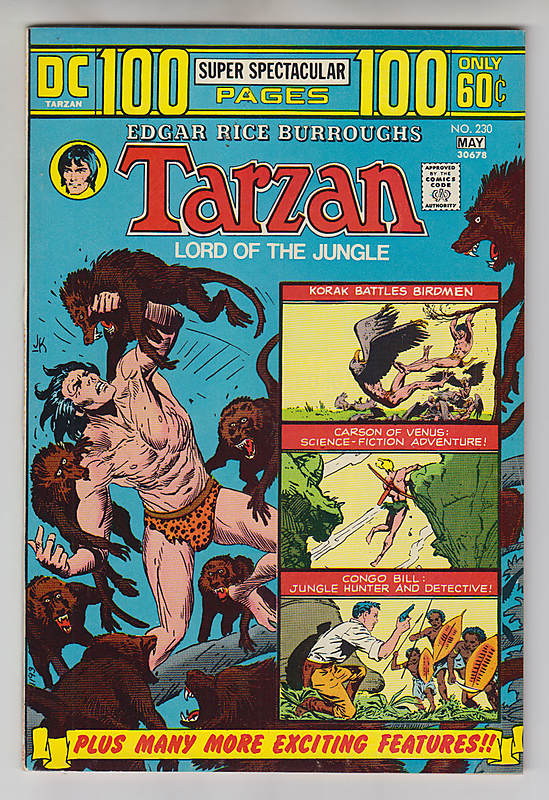
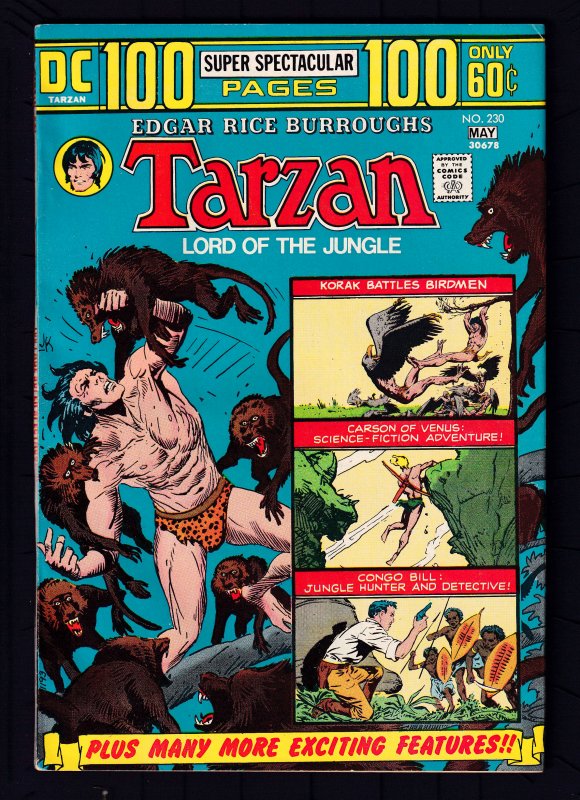
TARZAN (1972) #230
DC VF/NM: 9.0
ow/white pages
100 pages; Kubert monkey cover (believe it or not) COMIC BOOK IMPACT rating of 5 (CBI)
100 pages; Kubert monkey cover (believe it or not) COMIC BOOK IMPACT rating of 5 (CBI)
ow/white pages
100 pages; Kubert monkey cover (believe it or not) COMIC BOOK IMPACT rating of 5 (CBI)
100 pages; Kubert monkey cover (believe it or not) COMIC BOOK IMPACT rating of 5 (CBI)
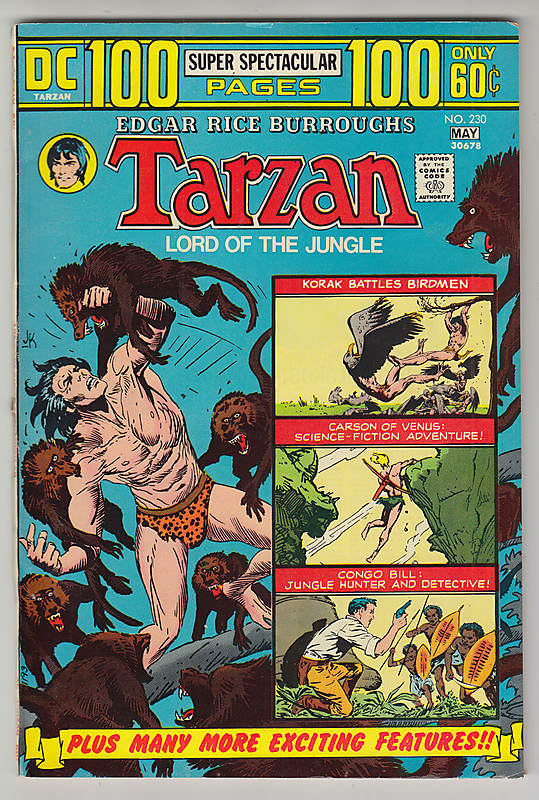
TARZAN (1972) #230
DC VF+: 8.5
glossy!
100 pages; Kubert monkey cover (believe it or not) COMIC BOOK IMPACT rating of 5 (CBI)
Pennsylvania Dutch Copy
100 pages; Kubert monkey cover (believe it or not) COMIC BOOK IMPACT rating of 5 (CBI)
Pennsylvania Dutch Copy
glossy!
100 pages; Kubert monkey cover (believe it or not) COMIC BOOK IMPACT rating of 5 (CBI)
Pennsylvania Dutch Copy
100 pages; Kubert monkey cover (believe it or not) COMIC BOOK IMPACT rating of 5 (CBI)
Pennsylvania Dutch Copy
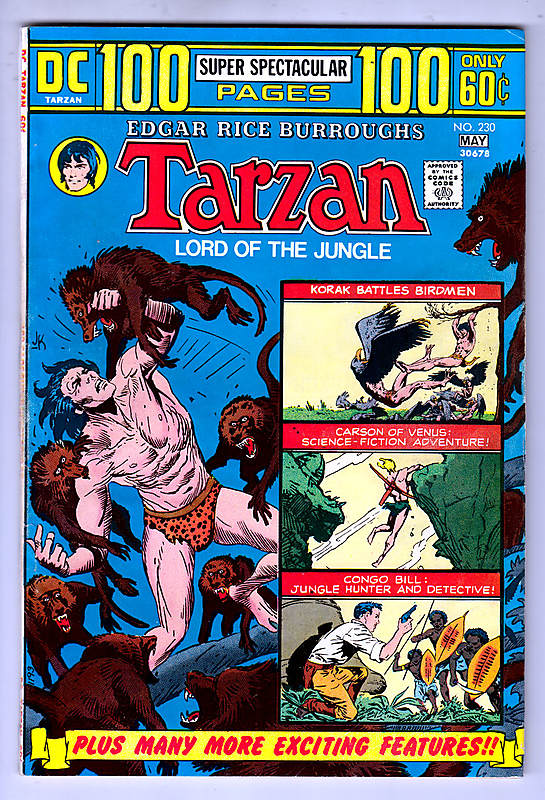
TARZAN (1972) #230
DC VF: 8.0
100 pages; Kubert monkey cover (believe it or not) COMIC BOOK IMPACT rating of 5 (CBI)
100 pages; Kubert monkey cover (believe it or not) COMIC BOOK IMPACT rating of 5 (CBI)
100 pages; Kubert monkey cover (believe it or not) COMIC BOOK IMPACT rating of 5 (CBI)
Pennsylvania Dutch Copy
100 pages; Kubert monkey cover (believe it or not) COMIC BOOK IMPACT rating of 5 (CBI)
Pennsylvania Dutch Copy