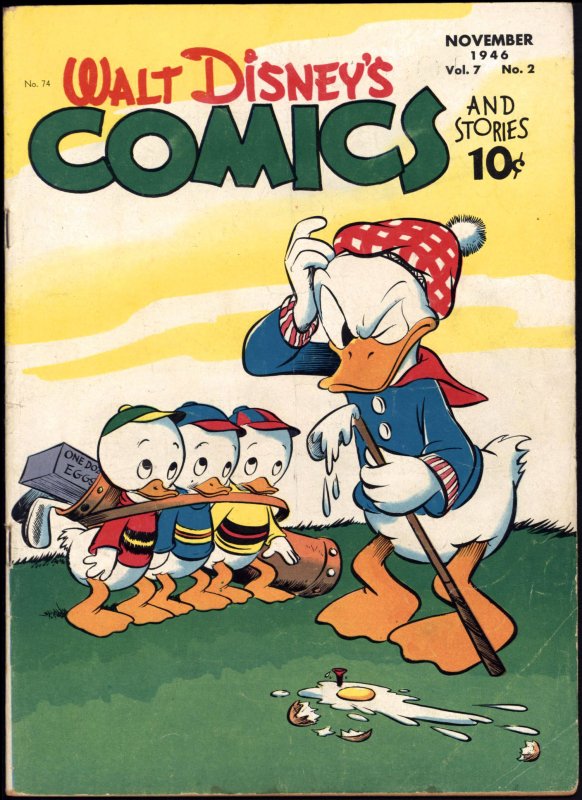
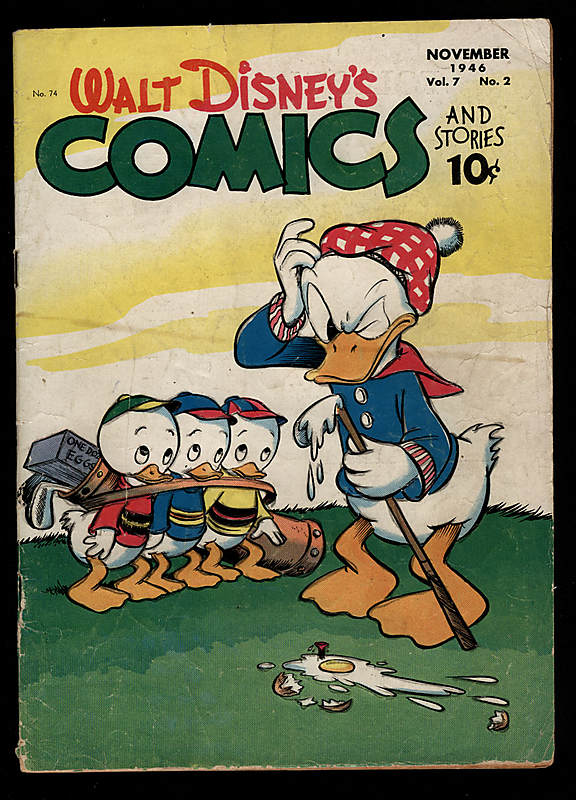
WALT DISNEY'S COMICS & STORIES #74
VG-: 3.5
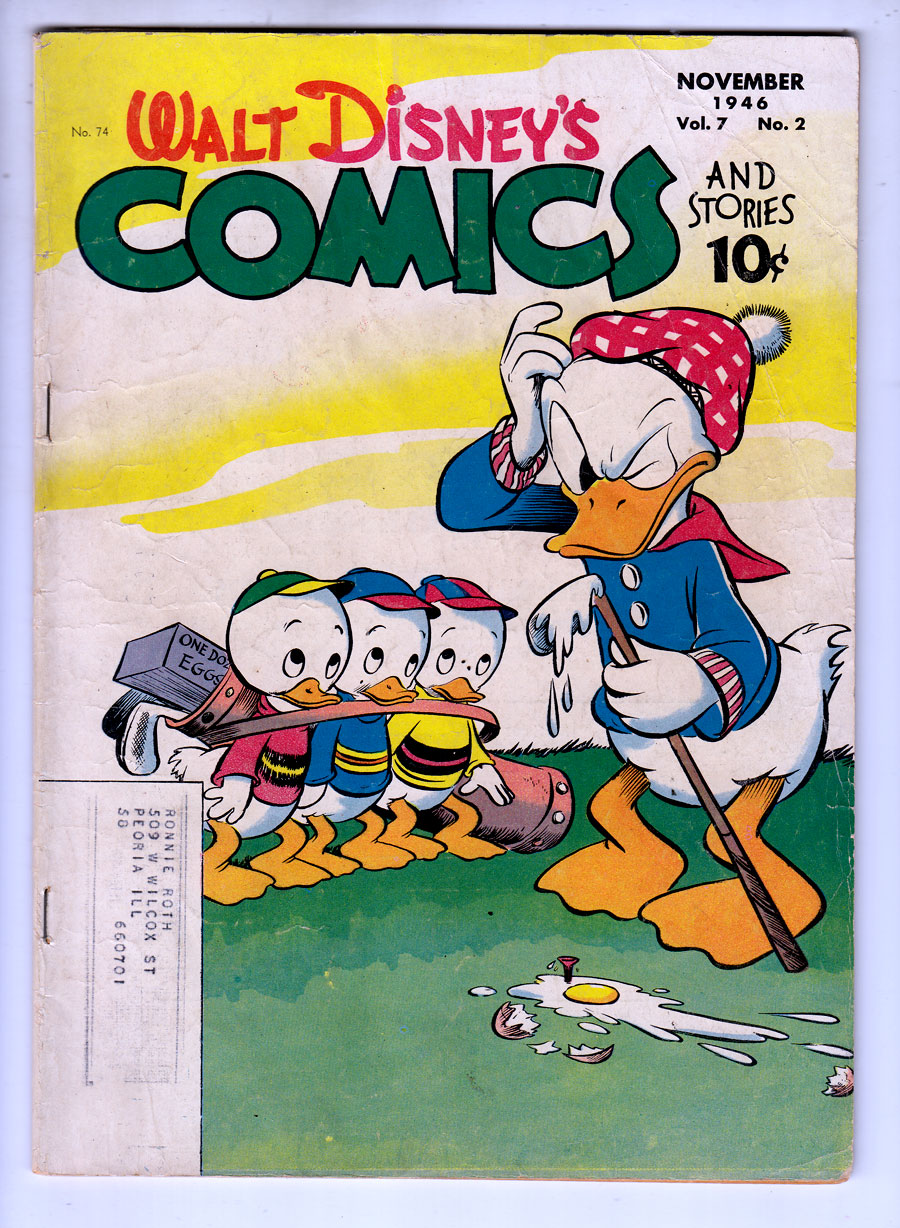
(Stock Image)

YES
Accepting Offers
--
Offers
PUBLISHER: Dell
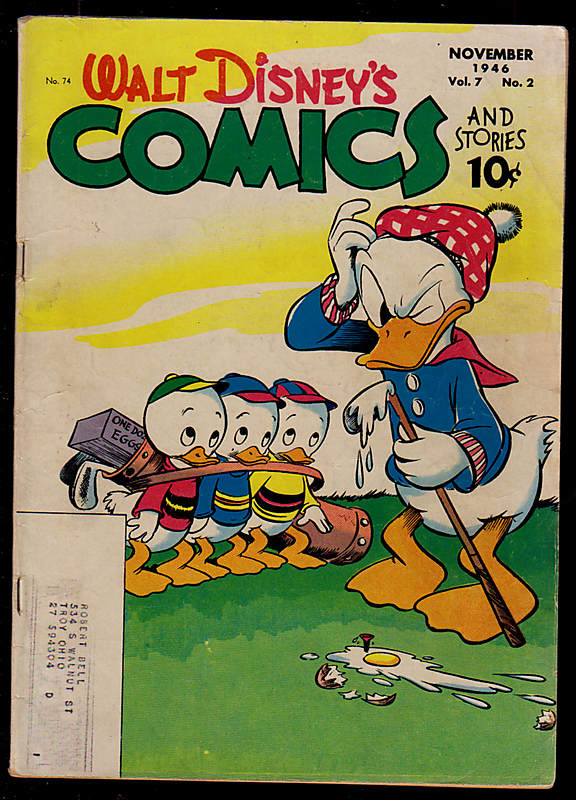
COMMENTS: Walt Kelly golf cover; Carl Barks art (11/46) COMIC BOOK IMPACT rating of 5 (CBI)
Read Description ▼
DESCRIPTION
Walt Kelly golf cover; Carl Barks art (11/46) COMIC BOOK IMPACT rating of 5 (CBI)Long before the purchase of Pixar in 2006, Walt Disney's iconic characters reached the hearts and minds of American children from the pages of Golden age comic books. With its predecessor, Mickey Mouse Magazine, dating back to 1933, Walt Disney Comics and Stories was launched by Dell comics in 1940. Initially taking content from the black & white comic strips of the day, they were reformatted and colored for comic books. Through aggressive marketing and holiday subscription incentives aimed at youngsters, the title became the best selling comic book in the U.S. by the mid-50's with an incredible three million copy monthly circulation. This issue starts with a mischievously fun Donald Duck feature written and classically drawn by Carl Barks, whose two decade tenure remains popular and beloved. Almost all of Barks' stories included Donald Duck's nephews, Huey, Dewey and Louie, followed by several short vignettes featuring a host of popular Disney characters. Many '40's era issues like this one featured an end story with Mickey Mouse penciled by Floyd Gottfredson and taken straight from the daily newspaper strips. After 71 years, six publishing houses and 720 issues, Disney's premiere title WDC&S is the longest running Disney-based comic book in history.
Artists Information
Carl Barks "The Duck Man" was an American cartoonist, comic book artist and painter who's famous for his freewheeling, high adventure stories at Disney focusing mostly on Donald Duck, his nephews, and their curmudgeonly Uncle Scrooge McDuck. Barks, who's career began in the early 1940s in Disney animation before transitioning over to the comic books where he had more freedom, in addition to introducing Uncle Scrooge, created many of the other supporting characters that have become beloved by fans in the ensuing decades, he was known only as "the good duck artist" for most of his career as his identity was largely unknown until the 1960s. Once his identity was revealed, and after his retirement from full time comic book making, Barks began a second career making oil paintings featuring recreations and reinterpretations of some of his classic duck imagery that have become coveted treasures. Barks' work from the 1940s is credited as inspiring a young Osamu Tezuka to give up his medical studies and devote his time in becoming a cartoonist, leading him to create Astro Boy and become the grandfather of Manga, the most popular form of comics in the world.
Walt Kelly is an American animator/ cartoonist who began his career working at Walt Disney studios contributing to animated films like Pinnochio, Fantasia and Dumbo. Walt later went on to work for Dell comics where he is most famous for creating the comic strip Pogo, which became his platform for social and philosophical commentary.
Artists Information
Carl Barks "The Duck Man" was an American cartoonist, comic book artist and painter who's famous for his freewheeling, high adventure stories at Disney focusing mostly on Donald Duck, his nephews, and their curmudgeonly Uncle Scrooge McDuck. Barks, who's career began in the early 1940s in Disney animation before transitioning over to the comic books where he had more freedom, in addition to introducing Uncle Scrooge, created many of the other supporting characters that have become beloved by fans in the ensuing decades, he was known only as "the good duck artist" for most of his career as his identity was largely unknown until the 1960s. Once his identity was revealed, and after his retirement from full time comic book making, Barks began a second career making oil paintings featuring recreations and reinterpretations of some of his classic duck imagery that have become coveted treasures. Barks' work from the 1940s is credited as inspiring a young Osamu Tezuka to give up his medical studies and devote his time in becoming a cartoonist, leading him to create Astro Boy and become the grandfather of Manga, the most popular form of comics in the world.
Walt Kelly is an American animator/ cartoonist who began his career working at Walt Disney studios contributing to animated films like Pinnochio, Fantasia and Dumbo. Walt later went on to work for Dell comics where he is most famous for creating the comic strip Pogo, which became his platform for social and philosophical commentary.
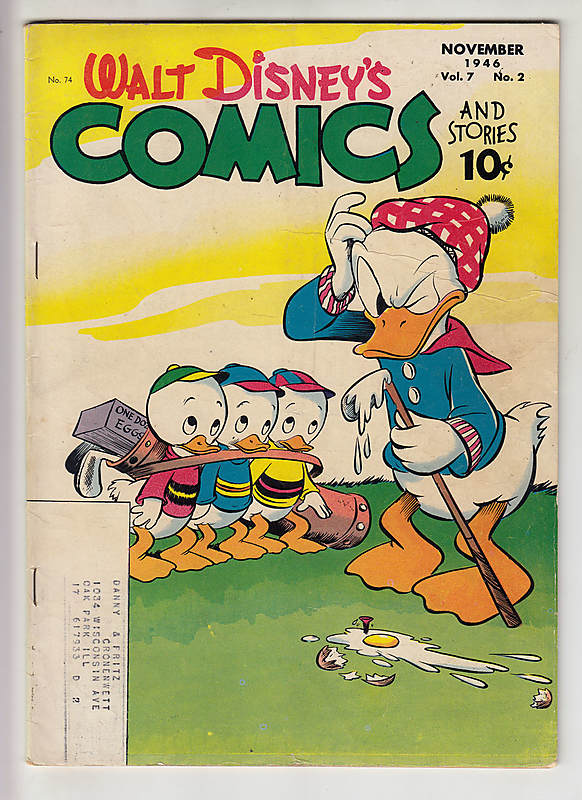
WALT DISNEY'S COMICS & STORIES #74
Dell FN: 6.0
Walt Kelly golf cover; Carl Barks art (11/46) COMIC BOOK IMPACT rating of 5 (CBI)
Walt Kelly golf cover; Carl Barks art (11/46) COMIC BOOK IMPACT rating of 5 (CBI)
Highest Offer: $70
WALT DISNEY'S COMICS & STORIES #74
Dell VG+: 4.5
ow pgs
Walt Kelly golf cover; Carl Barks art (11/46) COMIC BOOK IMPACT rating of 5 (CBI)
Walt Kelly golf cover; Carl Barks art (11/46) COMIC BOOK IMPACT rating of 5 (CBI)
ow pgs
Walt Kelly golf cover; Carl Barks art (11/46) COMIC BOOK IMPACT rating of 5 (CBI)
Walt Kelly golf cover; Carl Barks art (11/46) COMIC BOOK IMPACT rating of 5 (CBI)
WALT DISNEY'S COMICS & STORIES #74
Dell VG+: 4.5
Walt Kelly golf cover; Carl Barks art (11/46) COMIC BOOK IMPACT rating of 5 (CBI)
Walt Kelly golf cover; Carl Barks art (11/46) COMIC BOOK IMPACT rating of 5 (CBI)
WALT DISNEY'S COMICS & STORIES #74
Dell G/VG: 3.0
Walt Kelly golf cover; Carl Barks art (11/46) COMIC BOOK IMPACT rating of 5 (CBI)
Walt Kelly golf cover; Carl Barks art (11/46) COMIC BOOK IMPACT rating of 5 (CBI)