VF/NM: 9.0
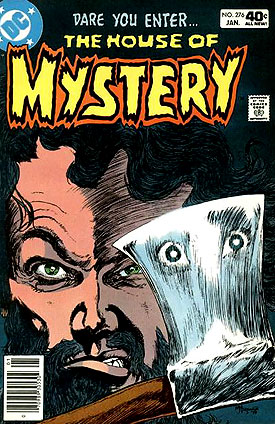
(Stock Image)

Highest Offer
1
Offers
PUBLISHER: DC
COMMENTS: Kaluta cover; Ditko art; COMIC BOOK IMPACT rating of 6 (CBI)
Read Description ▼
DESCRIPTION
Kaluta cover; Ditko art; COMIC BOOK IMPACT rating of 6 (CBI)
Artists Information
Steve Ditko was an American comics artist and writer best known for being the co-creator of Marvel superhero Spider-Man and creator of Doctor Strange. He also made notable contributions to the character of Iron Man, revolutionizing the character's red and yellow design.
Ditko studied under Batman artist Jerry Robinson at the Cartoonist and Illustrators School in New York City. He began his professional career in 1953, working in the studio of Joe Simon and Jack Kirby, beginning as an inker and coming under the influence of artist Mort Meskin. During this time, he began his long association with Charlton Comics, where he did work in the genres of science fiction, horror, and mystery. He also co-created the superhero Captain Atom in 1960.
During the summer of 1958, writer-editor Stan Lee invited Ditko back to Atlas. Ditko would go on to contribute a large number of stories, many considered classic, to Atlas/Marvel's Strange Tales and the newly launched Amazing Adventures, Strange Worlds, Tales of Suspense and Tales to Astonish, issues of which would typically open with a Kirby-drawn monster story, followed by one or two twist-ending thrillers or sci-fi tales drawn by Don Heck, Paul Reinman, or Joe Sinnott, all capped by an often-surreal, sometimes self-reflective short by Ditko and Stan Lee. The first collaboration between Ditko and Lee was 2-Gun Western #4 (May 1956), which was also Ditko's only non-fantasy story.
These Lee-Ditko short stories proved so popular that Amazing Adventures was reformatted to feature such stories exclusively beginning with issue #7 (Dec. 1961), when the comic was rechristened Amazing Adult Fantasy, a name intended to reflect its more "sophisticated" nature, as likewise the new tagline "The magazine that respects your intelligence". Lee in 2009 described these "short, five-page filler strips that Steve and I did together", originally "placed in any of our comics that had a few extra pages to fill", as "odd fantasy tales that I'd dream up with O. Henry-type endings." Giving an early example of what would later be known as the "Marvel Method" of writer-artist collaboration, Lee said, "All I had to do was give Steve a one-line description of the plot and he'd be off and running. He'd take those skeleton outlines I had given him and turn them into classic little works of art that ended up being far cooler than I had any right to expect."
During the 1950s, Ditko also drew for Atlas Comics, a forerunner of Marvel Comics. He went on to contribute much significant work to Marvel. Ditko was the artist for the first 38 issues of The Amazing Spider-Man, co-creating much of the Spider-Man supporting characters and villains with Stan Lee. Beginning with issue #25, Ditko was also credited as the plotter. In 1966, after being the exclusive artist on The Amazing Spider-Man and the "Doctor Strange" feature in Strange Tales, Ditko left Marvel for a variety of reasons, including creative differences and unpaid royalties.
Ditko continued to work for Charlton and also DC Comics, including a revamp of the long-running character the Blue Beetle and creating or co-creating the Question, the Creeper, Shade the Changing Man, and Hawk and Dove. Ditko also began contributing to small independent publishers, where he created Mr. A, a hero reflecting the influence of Ayn Rand's philosophy of Objectivism. Ditko largely declined to give interviews, saying he preferred to communicate through his work.
Ditko was inducted into the comics industry's Jack Kirby Hall of Fame in 1990 and into the Will Eisner Award Hall of Fame in 1994. He will be posthumously honored as a Disney Legend in 2024.
Michael William Kaluta is an American comic artist and writer best known for his acclaimed 1970s adaptation of the pulp magazine hero The Shadow with writer Dennis O’Neil. Kaluta's early work included a three-page adventure story, "The Battle of Shiraz", in Charlton Comics Flash Gordon #18 (Jan. 1970) and an adaptation of Edgar Rice Burroughs's Carson of Venus novels for DC Comics. Kaluta's influences and style are drawn from pulp illustrations of the 1930s and the turn-of-the-century poster work of Alphonse Mucha – his signature motif is elaborate decorative panel designs – rather than the comic books of the Silver Age. He has rarely worked with the superhero genre, although one of his early contributions for DC was a "World of Krypton" backup story in Superman #240 (July 1971). His first cover for a comic book was House of Mystery #200 (March 1972). Associated during the 1970s with Bernie Wrightson and Jeffrey Jones, he contributed illustrations to Ted White's Fantastic and Amazing Stories. Kaluta co-created Eve in Secrets of Sinister House #6 (Aug.–Sept. 1972), a horror comics "host" character later turned into a supporting character in The Sandman. He and writer Dennis O'Neil produced a comics adaptation of The Shadow for DC in 1973–1974. Comics historian Les Daniels noted that "Kaluta's style [on The Shadow] is an homage to Graves Gladney, master of the pulp magazine covers of the 1930s." Kaluta left the series after drawing five of the first six issues. Kaluta was one of the four comic book artists/fine illustrator/painters (along with Jeffrey Jones, Barry Windsor-Smith, and Bernie Wrightson) who formed the artists' commune The Studio in a loft in Manhattan's Chelsea district in 1975 and continuing to 1979. In addition to many comic book stories and covers, Kaluta has done a wide variety of book illustrations. Kaluta drew the cover for the Madame Xanadu one-shot in 1981 which was DC's second direct sales only comic. He and writer Elaine Lee crafted Marvel Graphic Novel #13 "Starstruck: The Luckless, the Abandoned and Forsaked" which led to an ongoing series which ran for six issues. Kaluta and O'Neil reunited on The Shadow: 1941 – Hitler's Astrologer graphic novel published in 1988. In 2006, Kaluta was one of the artists on the 1001 Nights of Snowfall graphic novel written by Bill Willingham. In 1984 he drew the illustrations for and directed the music video of "Don't Answer Me" by The Alan Parsons Project, which became one of the most requested videos of the year on the cable video channel MTV. Among music fans, Kaluta is known as the cover artist of Glenn Danzig's instrumental album Black Aria and for the interior illustration of Danzig's fourth album, the latter of which appeared in 1994 and 1995 as a pendant sold at Danzig concerts, and on Danzig T-shirts and sweaters produced in the same period. Kaluta created the CD covers and interior booklet illustrations for Nativity in Black I and II, tribute albums to the music of Black Sabbath. Kaluta drew the cover art for the Bobby Pickett album The Original Monster Mash when it was reissued in 1973.
Artists Information
Steve Ditko was an American comics artist and writer best known for being the co-creator of Marvel superhero Spider-Man and creator of Doctor Strange. He also made notable contributions to the character of Iron Man, revolutionizing the character's red and yellow design.
Ditko studied under Batman artist Jerry Robinson at the Cartoonist and Illustrators School in New York City. He began his professional career in 1953, working in the studio of Joe Simon and Jack Kirby, beginning as an inker and coming under the influence of artist Mort Meskin. During this time, he began his long association with Charlton Comics, where he did work in the genres of science fiction, horror, and mystery. He also co-created the superhero Captain Atom in 1960.
During the summer of 1958, writer-editor Stan Lee invited Ditko back to Atlas. Ditko would go on to contribute a large number of stories, many considered classic, to Atlas/Marvel's Strange Tales and the newly launched Amazing Adventures, Strange Worlds, Tales of Suspense and Tales to Astonish, issues of which would typically open with a Kirby-drawn monster story, followed by one or two twist-ending thrillers or sci-fi tales drawn by Don Heck, Paul Reinman, or Joe Sinnott, all capped by an often-surreal, sometimes self-reflective short by Ditko and Stan Lee. The first collaboration between Ditko and Lee was 2-Gun Western #4 (May 1956), which was also Ditko's only non-fantasy story.
These Lee-Ditko short stories proved so popular that Amazing Adventures was reformatted to feature such stories exclusively beginning with issue #7 (Dec. 1961), when the comic was rechristened Amazing Adult Fantasy, a name intended to reflect its more "sophisticated" nature, as likewise the new tagline "The magazine that respects your intelligence". Lee in 2009 described these "short, five-page filler strips that Steve and I did together", originally "placed in any of our comics that had a few extra pages to fill", as "odd fantasy tales that I'd dream up with O. Henry-type endings." Giving an early example of what would later be known as the "Marvel Method" of writer-artist collaboration, Lee said, "All I had to do was give Steve a one-line description of the plot and he'd be off and running. He'd take those skeleton outlines I had given him and turn them into classic little works of art that ended up being far cooler than I had any right to expect."
During the 1950s, Ditko also drew for Atlas Comics, a forerunner of Marvel Comics. He went on to contribute much significant work to Marvel. Ditko was the artist for the first 38 issues of The Amazing Spider-Man, co-creating much of the Spider-Man supporting characters and villains with Stan Lee. Beginning with issue #25, Ditko was also credited as the plotter. In 1966, after being the exclusive artist on The Amazing Spider-Man and the "Doctor Strange" feature in Strange Tales, Ditko left Marvel for a variety of reasons, including creative differences and unpaid royalties.
Ditko continued to work for Charlton and also DC Comics, including a revamp of the long-running character the Blue Beetle and creating or co-creating the Question, the Creeper, Shade the Changing Man, and Hawk and Dove. Ditko also began contributing to small independent publishers, where he created Mr. A, a hero reflecting the influence of Ayn Rand's philosophy of Objectivism. Ditko largely declined to give interviews, saying he preferred to communicate through his work.
Ditko was inducted into the comics industry's Jack Kirby Hall of Fame in 1990 and into the Will Eisner Award Hall of Fame in 1994. He will be posthumously honored as a Disney Legend in 2024.
Michael William Kaluta is an American comic artist and writer best known for his acclaimed 1970s adaptation of the pulp magazine hero The Shadow with writer Dennis O’Neil. Kaluta's early work included a three-page adventure story, "The Battle of Shiraz", in Charlton Comics Flash Gordon #18 (Jan. 1970) and an adaptation of Edgar Rice Burroughs's Carson of Venus novels for DC Comics. Kaluta's influences and style are drawn from pulp illustrations of the 1930s and the turn-of-the-century poster work of Alphonse Mucha – his signature motif is elaborate decorative panel designs – rather than the comic books of the Silver Age. He has rarely worked with the superhero genre, although one of his early contributions for DC was a "World of Krypton" backup story in Superman #240 (July 1971). His first cover for a comic book was House of Mystery #200 (March 1972). Associated during the 1970s with Bernie Wrightson and Jeffrey Jones, he contributed illustrations to Ted White's Fantastic and Amazing Stories. Kaluta co-created Eve in Secrets of Sinister House #6 (Aug.–Sept. 1972), a horror comics "host" character later turned into a supporting character in The Sandman. He and writer Dennis O'Neil produced a comics adaptation of The Shadow for DC in 1973–1974. Comics historian Les Daniels noted that "Kaluta's style [on The Shadow] is an homage to Graves Gladney, master of the pulp magazine covers of the 1930s." Kaluta left the series after drawing five of the first six issues. Kaluta was one of the four comic book artists/fine illustrator/painters (along with Jeffrey Jones, Barry Windsor-Smith, and Bernie Wrightson) who formed the artists' commune The Studio in a loft in Manhattan's Chelsea district in 1975 and continuing to 1979. In addition to many comic book stories and covers, Kaluta has done a wide variety of book illustrations. Kaluta drew the cover for the Madame Xanadu one-shot in 1981 which was DC's second direct sales only comic. He and writer Elaine Lee crafted Marvel Graphic Novel #13 "Starstruck: The Luckless, the Abandoned and Forsaked" which led to an ongoing series which ran for six issues. Kaluta and O'Neil reunited on The Shadow: 1941 – Hitler's Astrologer graphic novel published in 1988. In 2006, Kaluta was one of the artists on the 1001 Nights of Snowfall graphic novel written by Bill Willingham. In 1984 he drew the illustrations for and directed the music video of "Don't Answer Me" by The Alan Parsons Project, which became one of the most requested videos of the year on the cable video channel MTV. Among music fans, Kaluta is known as the cover artist of Glenn Danzig's instrumental album Black Aria and for the interior illustration of Danzig's fourth album, the latter of which appeared in 1994 and 1995 as a pendant sold at Danzig concerts, and on Danzig T-shirts and sweaters produced in the same period. Kaluta created the CD covers and interior booklet illustrations for Nativity in Black I and II, tribute albums to the music of Black Sabbath. Kaluta drew the cover art for the Bobby Pickett album The Original Monster Mash when it was reissued in 1973.