FORBIDDEN TALES OF THE DARK MANSION #10
F/VF: 7.0
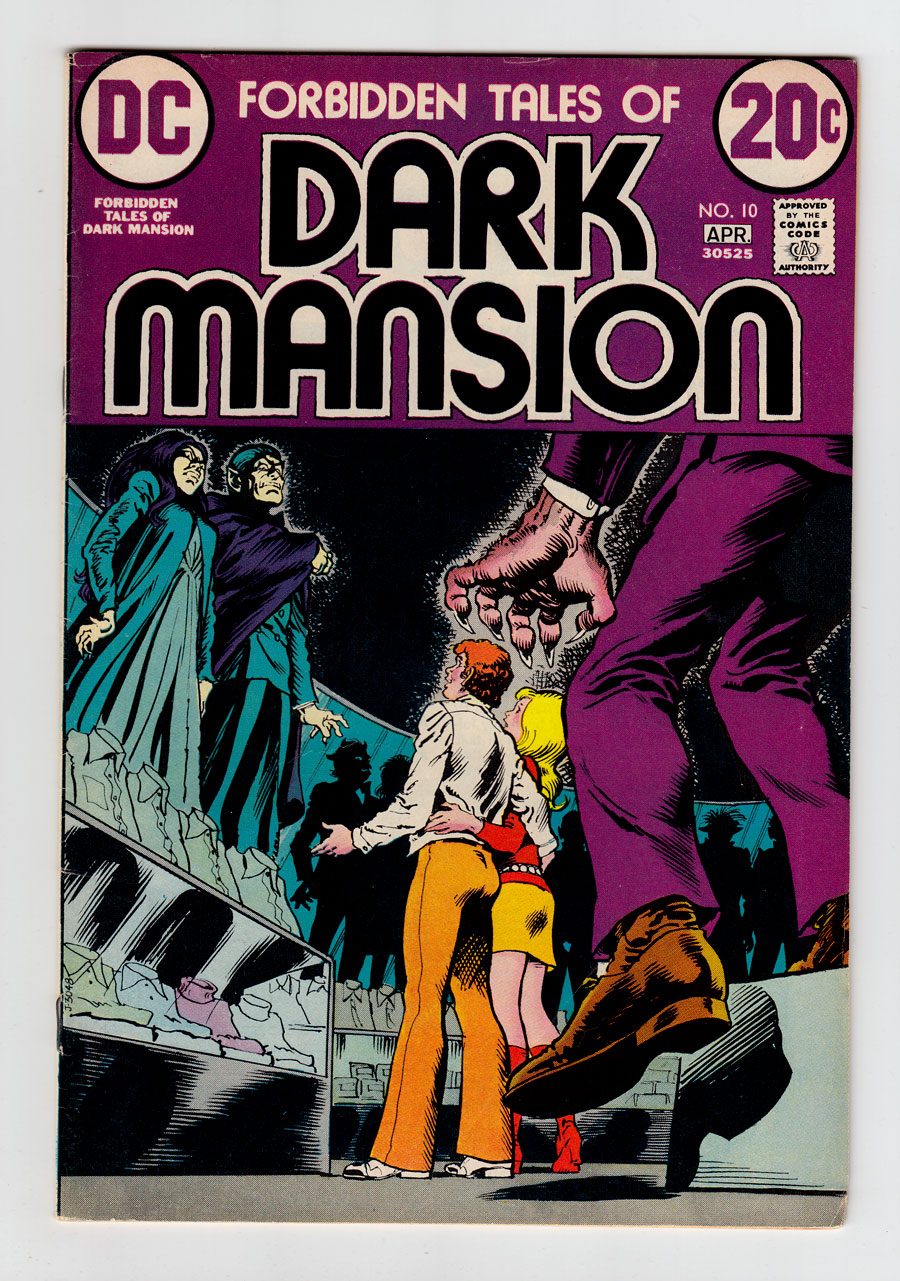
(Stock Image)

YES
Accepting Offers
--
Offers
DESCRIPTION
Kaluta art; COMIC BOOK IMPACT rating of 5 (CBI)
Artists Information
Michael William Kaluta is an American comic artist and writer best known for his acclaimed 1970s adaptation of the pulp magazine hero The Shadow with writer Dennis O’Neil. Kaluta's early work included a three-page adventure story, "The Battle of Shiraz", in Charlton Comics Flash Gordon #18 (Jan. 1970) and an adaptation of Edgar Rice Burroughs's Carson of Venus novels for DC Comics. Kaluta's influences and style are drawn from pulp illustrations of the 1930s and the turn-of-the-century poster work of Alphonse Mucha – his signature motif is elaborate decorative panel designs – rather than the comic books of the Silver Age. He has rarely worked with the superhero genre, although one of his early contributions for DC was a "World of Krypton" backup story in Superman #240 (July 1971). His first cover for a comic book was House of Mystery #200 (March 1972). Associated during the 1970s with Bernie Wrightson and Jeffrey Jones, he contributed illustrations to Ted White's Fantastic and Amazing Stories. Kaluta co-created Eve in Secrets of Sinister House #6 (Aug.–Sept. 1972), a horror comics "host" character later turned into a supporting character in The Sandman. He and writer Dennis O'Neil produced a comics adaptation of The Shadow for DC in 1973–1974. Comics historian Les Daniels noted that "Kaluta's style [on The Shadow] is an homage to Graves Gladney, master of the pulp magazine covers of the 1930s." Kaluta left the series after drawing five of the first six issues. Kaluta was one of the four comic book artists/fine illustrator/painters (along with Jeffrey Jones, Barry Windsor-Smith, and Bernie Wrightson) who formed the artists' commune The Studio in a loft in Manhattan's Chelsea district in 1975 and continuing to 1979. In addition to many comic book stories and covers, Kaluta has done a wide variety of book illustrations. Kaluta drew the cover for the Madame Xanadu one-shot in 1981 which was DC's second direct sales only comic. He and writer Elaine Lee crafted Marvel Graphic Novel #13 "Starstruck: The Luckless, the Abandoned and Forsaked" which led to an ongoing series which ran for six issues. Kaluta and O'Neil reunited on The Shadow: 1941 – Hitler's Astrologer graphic novel published in 1988. In 2006, Kaluta was one of the artists on the 1001 Nights of Snowfall graphic novel written by Bill Willingham. In 1984 he drew the illustrations for and directed the music video of "Don't Answer Me" by The Alan Parsons Project, which became one of the most requested videos of the year on the cable video channel MTV. Among music fans, Kaluta is known as the cover artist of Glenn Danzig's instrumental album Black Aria and for the interior illustration of Danzig's fourth album, the latter of which appeared in 1994 and 1995 as a pendant sold at Danzig concerts, and on Danzig T-shirts and sweaters produced in the same period. Kaluta created the CD covers and interior booklet illustrations for Nativity in Black I and II, tribute albums to the music of Black Sabbath. Kaluta drew the cover art for the Bobby Pickett album The Original Monster Mash when it was reissued in 1973.
Nick Cardi (Nicholas Viscardi) was an American comics artist best known for his DC Comics work on Aquaman, the Teen Titans and other major characters. Cardy was inducted into the Will Eisner Comic Book Hall of Fame in 2005. Cardy entered the comics field working for the Eisner/Iger studio, joining circa 1940, he worked on Fight Comics, Jungle Comics, Kaanga Comics, and Wings for Fiction House Publications. He wrote and drew the four-page backup feature "Lady Luck" in Will Eisner's 16-page, Spirit Section, from the May 18, 1941 strip through February 22, 1942. In 1950, Cardy began his decades-long association with DC Comics, starting with the comic book Gang Busters, developing his breakout reputation with Tomahawk, his most prominent series at the time. From 1962–1968, he drew the first 39 issues of Aquaman, whose character had previously starred in a backup feature in Adventure Comics, and all its covers through the final issue (#56, April 1971). Cardy first drew the Teen Titans in The Brave and the Bold #60 (July 1965), wherein the superhero sidekicks Robin, Kid Flash, and Aqualad were joined by Wonder Woman's younger sister Wonder Girl in her first appearance. After next being featured in Showcase #59 (Dec. 1965), the team was spun off into their own series with Teen Titans #1 (Feb. 1966). From 1966–73, Cardy penciled or inked – sometimes both – all 43 issues of the series. Cardy left the comics industry in the mid-1970's for the more lucrative field of commercial art. There, under the name Nick Cardi, he did magazine art and ad illustrations, including movie advertising art (though not necessarily the "one-sheet" posters) for films including The Street Fighter (1974), The Night They Robbed Big Bertha's (1975), Neil Simon's California Suite (1978), Stanley Donen's Movie Movie (1978), Martin Ritt's Casey's Shadow (1978), and Francis Ford Coppola's Apocalypse Now (1979).
Alfredo Alcala was a Filipino comic book artist known for his illustration in "Alcala Komix Magazine" and also his 1963 creation "Voltar", which led him to more international popularity. In 1971 Alcala began to work for both DC and Marvel Comics on horror and fantasy titles. He was one of the artists on the licensed movie tie-in series Planet of the Apes. In the early 1980s he penciled the Star Wars newspaper strip and inked comic books such as Conan the Barbarian over John Buscema's pencils and inked Don Newton's pencil artwork in Batman.
Artists Information
Michael William Kaluta is an American comic artist and writer best known for his acclaimed 1970s adaptation of the pulp magazine hero The Shadow with writer Dennis O’Neil. Kaluta's early work included a three-page adventure story, "The Battle of Shiraz", in Charlton Comics Flash Gordon #18 (Jan. 1970) and an adaptation of Edgar Rice Burroughs's Carson of Venus novels for DC Comics. Kaluta's influences and style are drawn from pulp illustrations of the 1930s and the turn-of-the-century poster work of Alphonse Mucha – his signature motif is elaborate decorative panel designs – rather than the comic books of the Silver Age. He has rarely worked with the superhero genre, although one of his early contributions for DC was a "World of Krypton" backup story in Superman #240 (July 1971). His first cover for a comic book was House of Mystery #200 (March 1972). Associated during the 1970s with Bernie Wrightson and Jeffrey Jones, he contributed illustrations to Ted White's Fantastic and Amazing Stories. Kaluta co-created Eve in Secrets of Sinister House #6 (Aug.–Sept. 1972), a horror comics "host" character later turned into a supporting character in The Sandman. He and writer Dennis O'Neil produced a comics adaptation of The Shadow for DC in 1973–1974. Comics historian Les Daniels noted that "Kaluta's style [on The Shadow] is an homage to Graves Gladney, master of the pulp magazine covers of the 1930s." Kaluta left the series after drawing five of the first six issues. Kaluta was one of the four comic book artists/fine illustrator/painters (along with Jeffrey Jones, Barry Windsor-Smith, and Bernie Wrightson) who formed the artists' commune The Studio in a loft in Manhattan's Chelsea district in 1975 and continuing to 1979. In addition to many comic book stories and covers, Kaluta has done a wide variety of book illustrations. Kaluta drew the cover for the Madame Xanadu one-shot in 1981 which was DC's second direct sales only comic. He and writer Elaine Lee crafted Marvel Graphic Novel #13 "Starstruck: The Luckless, the Abandoned and Forsaked" which led to an ongoing series which ran for six issues. Kaluta and O'Neil reunited on The Shadow: 1941 – Hitler's Astrologer graphic novel published in 1988. In 2006, Kaluta was one of the artists on the 1001 Nights of Snowfall graphic novel written by Bill Willingham. In 1984 he drew the illustrations for and directed the music video of "Don't Answer Me" by The Alan Parsons Project, which became one of the most requested videos of the year on the cable video channel MTV. Among music fans, Kaluta is known as the cover artist of Glenn Danzig's instrumental album Black Aria and for the interior illustration of Danzig's fourth album, the latter of which appeared in 1994 and 1995 as a pendant sold at Danzig concerts, and on Danzig T-shirts and sweaters produced in the same period. Kaluta created the CD covers and interior booklet illustrations for Nativity in Black I and II, tribute albums to the music of Black Sabbath. Kaluta drew the cover art for the Bobby Pickett album The Original Monster Mash when it was reissued in 1973.
Nick Cardi (Nicholas Viscardi) was an American comics artist best known for his DC Comics work on Aquaman, the Teen Titans and other major characters. Cardy was inducted into the Will Eisner Comic Book Hall of Fame in 2005. Cardy entered the comics field working for the Eisner/Iger studio, joining circa 1940, he worked on Fight Comics, Jungle Comics, Kaanga Comics, and Wings for Fiction House Publications. He wrote and drew the four-page backup feature "Lady Luck" in Will Eisner's 16-page, Spirit Section, from the May 18, 1941 strip through February 22, 1942. In 1950, Cardy began his decades-long association with DC Comics, starting with the comic book Gang Busters, developing his breakout reputation with Tomahawk, his most prominent series at the time. From 1962–1968, he drew the first 39 issues of Aquaman, whose character had previously starred in a backup feature in Adventure Comics, and all its covers through the final issue (#56, April 1971). Cardy first drew the Teen Titans in The Brave and the Bold #60 (July 1965), wherein the superhero sidekicks Robin, Kid Flash, and Aqualad were joined by Wonder Woman's younger sister Wonder Girl in her first appearance. After next being featured in Showcase #59 (Dec. 1965), the team was spun off into their own series with Teen Titans #1 (Feb. 1966). From 1966–73, Cardy penciled or inked – sometimes both – all 43 issues of the series. Cardy left the comics industry in the mid-1970's for the more lucrative field of commercial art. There, under the name Nick Cardi, he did magazine art and ad illustrations, including movie advertising art (though not necessarily the "one-sheet" posters) for films including The Street Fighter (1974), The Night They Robbed Big Bertha's (1975), Neil Simon's California Suite (1978), Stanley Donen's Movie Movie (1978), Martin Ritt's Casey's Shadow (1978), and Francis Ford Coppola's Apocalypse Now (1979).
Alfredo Alcala was a Filipino comic book artist known for his illustration in "Alcala Komix Magazine" and also his 1963 creation "Voltar", which led him to more international popularity. In 1971 Alcala began to work for both DC and Marvel Comics on horror and fantasy titles. He was one of the artists on the licensed movie tie-in series Planet of the Apes. In the early 1980s he penciled the Star Wars newspaper strip and inked comic books such as Conan the Barbarian over John Buscema's pencils and inked Don Newton's pencil artwork in Batman.